
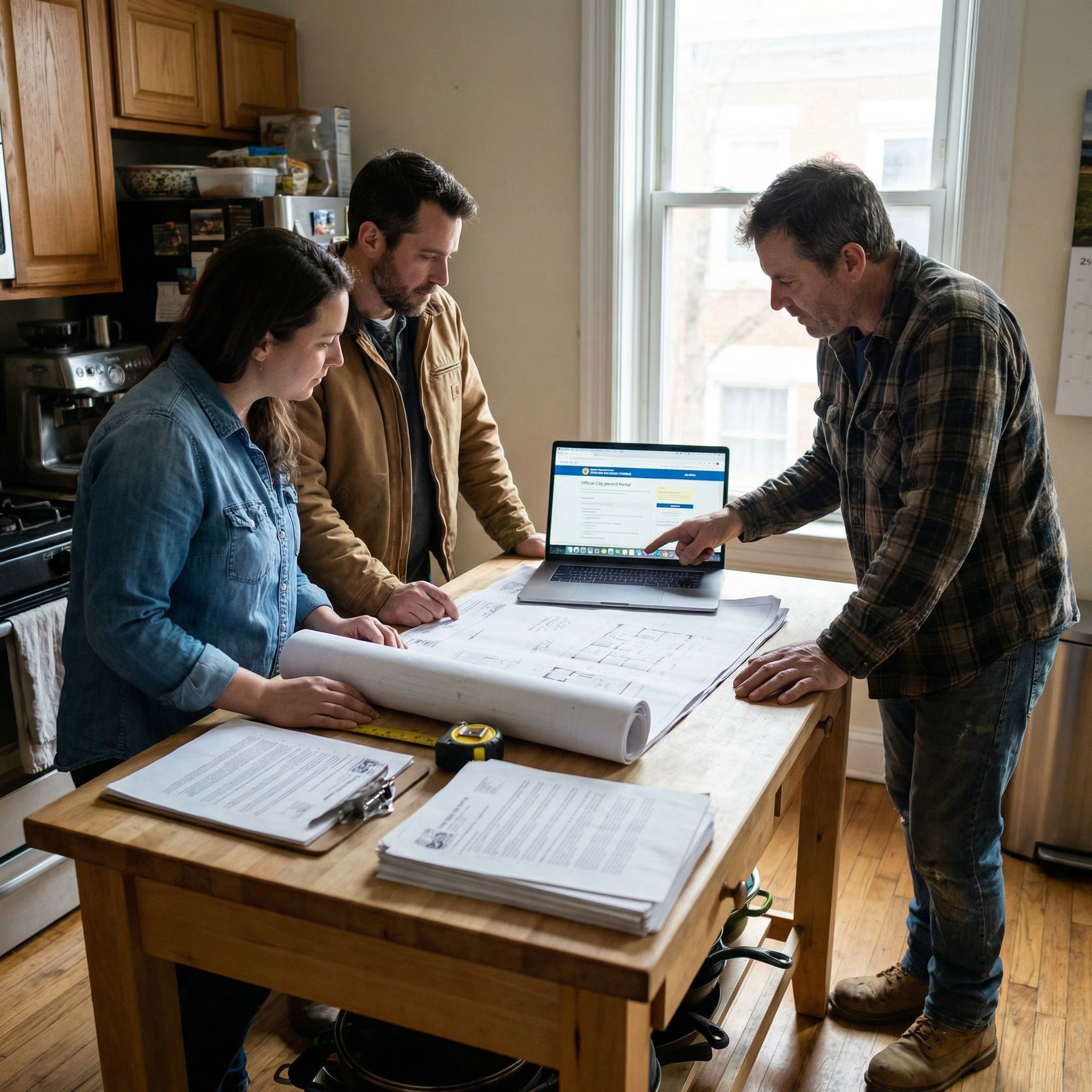
If you are planning a remodel in Pennsylvania or New Jersey, permits will come up early. Homeowners across Philadelphia, Chestnut Hill, King of Prussia, Ardmore, Gladwyne, Bryn Mawr, Villanova, Langhorne, Devon, Newtown Township, and Conshohocken often ask the same question. Do I need a permit for this renovation? In New Jersey, we hear it just as often in places like Montclair, Princeton, Cherry Hill, Haddonfield, Short Hills, Blackwood, Audubon, Deptford, Moorestown, Voorhees Township, and Collingswood.
Permits can feel like extra paperwork, but they exist for a reason. For most real remodeling projects, especially kitchens, bathrooms, additions, and layout changes, permits help confirm that the work meets safety standards and gets inspected at key stages.
This guide explains what typically triggers permits in PA and NJ, how the process usually works, and how a general contractor can make it smoother.
Disclaimer: This article is general information, not legal advice. Permit rules vary by municipality and scope, and requirements can change. Always confirm with your local building department or your project team before starting work.
What a permit actually does
A permit is the city, township, or state-approved process that allows regulated construction work to move forward. Depending on the project, permits can involve:
- Plan review, where officials check drawings and scope for code compliance
- Required inspections at key stages, such as framing, rough-in, and final
- Documentation that can protect you later, including during resale
Even if a renovation looks simple from the outside, it can involve structural, electrical, plumbing, HVAC, or fire safety components that must be permitted and inspected.
Common permit types homeowners hear about
Names vary by jurisdiction, but most remodeling permits fall into a few buckets:
- Building permit for structural work, framing, additions, major alterations, and certain exterior work
- Trade permits for electrical, plumbing, and mechanical (HVAC) work
- Zoning approvals or zoning permits when a project affects use, footprint, setbacks, height, or exterior changes
- Demolition permits for full demolition and in some areas for major removals
It is normal for a single renovation to involve more than one permit. A kitchen remodel may require a building permit plus electrical and plumbing permits. A home addition can involve zoning and building permits plus multiple trade permits.
What work usually requires a permit in PA and NJ
Every municipality is different, but these are common permit triggers for residential remodeling in Pennsylvania and New Jersey:
- Adding square footage, including additions, extensions, and new rooms
- Changing structural elements, such as removing walls, adding beams, or changing framing
- Moving or adding plumbing, including new supply and drain lines
- Upgrading or adding electrical circuits, moving outlets, adding high-load appliances, or changing the service panel
- HVAC changes, including new equipment, ductwork modifications, and some gas line work
- Creating new bedrooms or finished basements that affect egress, smoke and CO requirements, or occupancy use
- New decks, porches, structural stairs, and some exterior structural work
In contrast, cosmetic work often does not require permits. Painting, minor finish repairs, and many surface-level updates may be permit-free. However, the moment you touch structure or regulated systems, permits become more likely. When in doubt, ask before you start.
Common remodel examples and what to watch for
Do you need a permit for a kitchen remodel?
Many kitchen remodels involve electrical upgrades, plumbing changes, ventilation improvements, and sometimes wall changes. Those items typically trigger permits. If you are only replacing cabinets and finishes in the same footprint and you are not changing plumbing or electrical, permits may be less likely, but you still should confirm locally.
Do you need a permit for a bathroom remodel?
Bathroom remodels often involve plumbing and electrical work, new ventilation, and waterproofing details. If plumbing is being moved, a new shower is being built, or electrical is being changed, permits are commonly required. Bathrooms are also high-risk areas for water damage, so inspections can protect the investment you are making.
Finishing a basement
Basement projects often trigger permits because they can involve new rooms, egress requirements, electrical additions, and plumbing for bathrooms or wet bars. Even if the basement is already “dry,” a finished basement changes how the space is used and inspected.
Home additions and extensions
Additions almost always require permits. You are changing structure, potentially changing the footprint, and adding systems. Additions often require zoning review as well. This is one of the clearest cases where a general contractor and design team can prevent delays.
How permits work locally in Philadelphia, PA suburbs, and New Jersey
The main thing to understand is that permits are handled locally. The process and paperwork depend on where the property is located.
Philadelphia, PA (L&I and multiple permit types)
Philadelphia permit work is handled through the Department of Licenses and Inspections (L&I). Philadelphia offers multiple permit types, including building permits and trade permits such as electrical, plumbing, and mechanical permits. Depending on the project, a zoning permit may also be needed.
Philadelphia also has a streamlined path for certain smaller projects, commonly referred to as EZ permits, which are used for some work that does not require plan submissions. Even when EZ permits apply, you still want to confirm your exact scope and what is allowed.
Philadelphia permit applications can be submitted online using eCLIPSE, and the City also offers in-person options by appointment.
Pennsylvania suburbs (UCC permitting through your municipality)
Outside Philadelphia, Pennsylvania follows the Uniform Construction Code (UCC) framework. In general, the UCC requires property owners to obtain a building permit before starting construction, and inspections are often required when work involves building changes or regulated systems like electrical, gas, mechanical, or plumbing.
In many cases, permits are processed through your local municipality or an authorized third-party building code official, depending on how that jurisdiction administers UCC enforcement.
New Jersey (construction permits through local code enforcement)
In New Jersey, construction permits are typically submitted through your Local Construction Code Enforcement Office. The New Jersey Department of Community Affairs (DCA) publishes the standard Construction Permit Application Packet and related forms, which are used statewide.
Some municipalities receive construction code enforcement services through DCA Regional Code Enforcement offices. In those cases, the regional office can provide permit guidance, plan review, permit issuance, and inspections. Whether you go through your town office or a regional office depends on the municipality.
Permits vs licenses vs registration: what homeowners should verify
Many homeowners use the word “license” to mean any sign that a contractor is legitimate. In practice, there are three different concepts that often overlap:
- Permits, which approve and track the construction work
- Licenses, which some cities require for contractors or specific trades
- Registration, which some states require for home improvement contractors
Pennsylvania contractor licensing and home improvement registration
Pennsylvania does not have statewide licensure requirements for most construction contractors. However, Pennsylvania’s Home Improvement Consumer Protection Act requires most home improvement contractors to register with the Pennsylvania Office of Attorney General if they perform at least $5,000 worth of home improvements per year.
Some municipalities can also have local licensing requirements. Philadelphia, for example, has contractor requirements and licensing processes that may apply depending on scope and trade.
New Jersey contractor registration
New Jersey has a Contractor’s Registration Act that requires home improvement contractors to register with the New Jersey Division of Consumer Affairs and display their registration number. Consumers may see this as an NJHIC number, and in many cases the registration number begins with “13VH.”
A practical takeaway for homeowners is to ask for the contractor’s registration number and verify it before signing a contract, especially for larger projects.
Why skipping permits usually backfires
Some homeowners consider skipping permits to save time or money. In reality, it often increases risk. Common problems include:
- Stop-work orders that delay the project
- Costly rework if work is not compliant and must be corrected
- Issues during resale when buyers ask for permit history
- Insurance complications after a loss if work was unpermitted
- Safety risks that are hard to see until something fails
For quality remodeling, permits and inspections should be treated as part of planning, not a surprise in the middle of construction.
What the permit timeline usually looks like
Exact timelines vary widely, but most permit processes include these stages:
- Scope definition and early feasibility checks
- Drawings and documentation, especially for structural or addition work
- Permit application submission and fee payment
- Plan review when plans are required
- Permit issuance
- Inspections during construction
- Final approval and close-out documentation, when required
If you want a renovation to move smoothly, build permit review time into the schedule from day one. A good contractor will treat permit milestones as part of the project plan.
How a general contractor helps with permits and inspections
Permits are not just paperwork. They affect design, schedule, cost, and sequencing. A general contractor helps by:
- Identifying permit needs early so your design and budget match reality
- Coordinating the right drawings, including architect or engineer support when needed
- Managing submissions and responding to plan review comments
- Coordinating licensed trade partners for electrical, plumbing, and mechanical work
- Scheduling inspections at the right times so the job does not stall
- Keeping documentation organized for your records and future resale
For homeowners, the biggest benefit is predictability. When permits are handled correctly, the project is far less likely to get stuck midstream.
Quick homeowner checklist before your remodel starts
- List your scope in writing. Include layout changes and any plumbing, electrical, or HVAC changes.
- Ask your contractor which permits they expect and who will pull them.
- Confirm how inspections will be scheduled and communicated.
- Ask for proof of insurance and the relevant registration or license numbers for your area.
- Build permit time into your schedule, especially for additions and structural work.
Frequently asked questions
Can a homeowner pull their own permit?
In many areas, homeowners can apply for certain permits as the property owner. However, larger remodels often involve licensed trades, multiple inspections, and plan coordination. Many homeowners choose to have the contractor pull permits so accountability is clear and the process stays organized.
Do you always need a zoning permit first?
Not always. Zoning requirements depend on scope and location. Projects that affect footprint, exterior changes, use, or setbacks are more likely to involve zoning review. Your project team should check early so you do not lose time later.
What is the fastest way to avoid permit delays?
Be clear on scope, avoid last-minute design changes, and work with a contractor who plans permit milestones into the schedule. In many cases, delays come from missing documents or unclear scope.
Work with Nassour Creations
Permits and inspections should not slow down your renovation. At Nassour Creations, we help homeowners in Philadelphia and New Jersey plan remodels that are built to pass inspections and built to last. Whether you are renovating one space or tackling a full home project, our team coordinates the details so you can stay focused on the end result.
- Licensed and insured
- Based in Philadelphia
- Serving Pennsylvania and New Jersey
- Supported by a team that includes architects and interior designers
- Specializing in kitchens, bathrooms, whole home remodels, additions, and custom woodwork
👉 Schedule your free consultation:
📱 Call (267) 549‑3615
💬 Or message us on WhatsApp
Sources
City of Philadelphia: Building and Repair Permits, City of Philadelphia: Get a Building Permit, Philadelphia L&I: Contractor Requirements, Pennsylvania DLI: Apply for a UCC Building Permit, Pennsylvania DLI: Contractor Licensing and HIC Registration Notes, PA Attorney General: Home Improvement Contractor Registration (HICPA), NJ DCA: Construction Permit Application Packet and Related Forms, NJBAC Quick Start Guide: Home Improvement Contractor Registration, NJ Office of the Attorney General: Contractor Registration Act Overview
Permits can feel confusing in PA and NJ. Here is what usually requires approval, how inspections work, and how to avoid costly delays.
Tags: bathroom remodel permit ▪ building inspections ▪ contractor registration NJ ▪ contractor registration PA ▪ home addition permit ▪ kitchen remodel permit ▪ L&I Philadelphia ▪ licensed general contractor ▪ New Jersey construction permits ▪ Pennsylvania UCC permit ▪ permit checklist ▪ Philadelphia building permits ▪ remodeling permits ▪ renovation planning ▪ zoning permit


